

Pour Over Coffee Brewing: Mistakes to Avoid
Justin VanHoyPour over coffee brewing is about as stripped down as coffee gets: hot water, ground coffee, a filter, and a vessel to catch what drips through. There is no pump, no programming, no carafe warming plate. That simplicity is exactly why so many cups come out flat, thin, or bitter. Nothing hides your mistakes.
Pour over also has a way of rewarding attention. A slow, steady stream of hot water over the grounds can pull a full-flavored but delicate cup with more nuance and subtlety than most machine methods manage. The opposite is just as true. A rushed, careless pour produces a cup that tastes like the effort you put in. Here is what pour over coffee brewing actually involves, and the errors that quietly ruin it.
Home brewing is not a niche habit. In the US, the National Coffee Association reports that 66 percent of adults drink coffee daily, and 84 percent of those drinkers prefer to brew their own at home. With that many people making coffee by hand, the small details matter more than most people expect.
What Pour Over Coffee Brewing Actually Is
In its simplest form, pour over coffee involves pouring hot water over ground coffee that is held in some form of filter. The water steeps into the grounds, then drains through the coffee and the filter into a vessel below. That is the whole mechanism. Everything else, the dripper shape, the filter material, the pouring motion, is a variation on that one idea.
The equipment list is short. You need beans, water, and a coffee filter, usually made from biodegradable materials such as paper or a reusable cloth. You also need something to hold the filter, whether that is a cone, a funnel style brewer, or a larger carafe design. Some brewers use dedicated filters cut for a specific model, such as the large pre-folded squares made for a Chemex. None of it requires electricity beyond heating the water.
That is why pour over is often described as coffee at its most basic: just you, a cup, a filter, and a funnel. No machine stands between you and the result. For coffee lovers, the method has become something close to an art form, a place where precision meets creativity. It is also the reason the method is unforgiving. When you remove the machine, you inherit every decision the machine used to make.
Pour Over and Drip Coffee Are Not the Same Thing
Pour over coffee and drip coffee commonly get misconstrued. Both send water through a bed of ground coffee and a filter, so the confusion is reasonable. The difference sits in who controls the water. A drip brewer releases water on its own schedule and lets the process run. Pour over puts the water under your hand, which means the timing, the speed, and the coverage of every pour belong to you.
That distinction should change how you troubleshoot. If a machine-made cup tastes off, you adjust the machine or the recipe. If a pour over cup tastes off, the answer usually lives in your technique. Treating pour over like a drip brewer that happens to be manual is one of the most common reasons home cups disappoint.
Mistake One: Pouring Too Fast
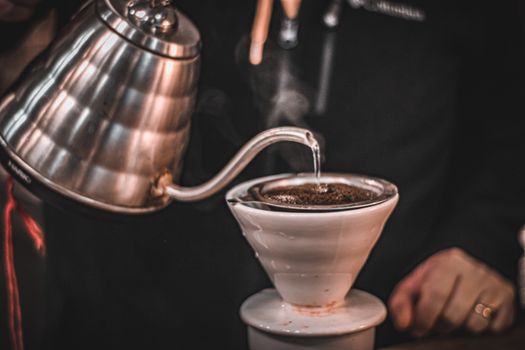
This is the error that shows up most often. Pour over coffee is made by slowly pouring hot water over ground coffee beans so they brew evenly. A slow, steady stream gives the water time to saturate the grounds and pull flavor from all of them. A fast flood does the opposite. The water can push through before it has done its work, and the cup comes out weak and sour even though you used plenty of coffee.
The fix costs nothing. Slow down. Pour in smaller, controlled additions rather than emptying your kettle in one go, and watch the bed of grounds rather than the clock. If the water level is dropping almost as fast as you pour, you are moving too quickly.
Mistake Two: Pouring in One Spot
Water takes the easiest path it can find. If you keep hitting the same patch of the coffee bed, you saturate that area heavily and leave other sections barely wet. Those dry pockets never contribute flavor, and the grounds that do get hit are over-extracted to compensate. The result is a cup that tastes both hollow and harsh, which is a confusing combination to diagnose.
Move the stream deliberately. Work around the bed in a steady pattern so the whole surface gets wet early, then keep the pours even. Even brewing depends on even saturation, and even saturation depends on where you aim the kettle.
Mistake Three: Treating the Filter as an Afterthought
A filter is not a passive accessory. It is the barrier that determines what reaches your cup and what stays behind, and different materials behave differently. Paper and reusable cloth both work, but they do not produce an identical beverage. Match the filter to the brewer it was made for and use one that fits properly. A filter that collapses, folds inward, or lets grit through will undo good pouring.
Choices like the large pre-folded squares made for a Chemex exist for a reason, and that reason is fit. Use the filter shaped for your setup, seat it fully, and check that the seal against the dripper wall is clean before you add coffee.
Mistake Four: A Grind That Does Not Match the Filter
Water moves through a coffee bed at a speed set largely by the size of the particles. Grind too fine for your filter and the bed can choke, holding water far longer than intended. Grind too coarse and the water races straight through, leaving little flavor behind. Neither outcome is the filter's fault. It is a mismatch.
Consistency matters as much as the setting. A bed made of wildly different particle sizes extracts unevenly no matter how carefully you pour, because the fine particles give up their flavor long before the coarse ones do. Grinding close to brew time keeps the bed fresher and more predictable.

Mistake Five: Walking Away Mid-Brew
Pour over is hands-on by design. The moment you step away, you stop being the brewer. Water keeps draining whether or not you are watching, and by the time you come back the bed may be dry with more water still to add. That gap between pours changes how the coffee extracts, and it is not a change you chose.
Stay with the brewer from first pour to last drop. The whole process takes only a few minutes, and those minutes are the entire method.
Mistake Six: Ignoring the Water
Coffee is mostly water, so water that tastes unpleasant on its own will taste unpleasant in the cup no matter how good your beans are. If your tap water carries a strong mineral or chemical flavor, that character survives brewing. Try the water you plan to use before you commit a batch of specialty coffee to it.
Mistake Seven: Blaming the Method Instead of the Beans
Pour over can reveal nuance, but it cannot create flavor that was never there. Stale coffee produces a flat cup regardless of technique. Start with fresh whole bean coffee, grind it shortly before brewing, and give the method something worth extracting. If a coffee tastes dull through a careful pour over, the next variable to question is the coffee itself, not the dripper.
Quick Reference: Common Pour Over Mistakes
| Mistake | What It Does to the Cup | Simple Fix |
|---|---|---|
| Pouring too fast | Water passes through before extracting much flavor | Use a slow, steady stream in smaller additions |
| Pouring in one spot | Dry pockets leave the cup hollow and harsh | Move the stream around the bed in a steady pattern |
| Wrong or badly fitted filter | Grit in the cup or a collapsed bed | Use the filter made for your brewer and seat it fully |
| Mismatched grind | Water stalls or rushes through | Adjust grind until drainage looks steady and even |
| Leaving mid-brew | Unplanned gaps between pours | Stay at the brewer until the last drop |
| Poor water | Off flavors carry straight into the cup | Taste your water before brewing with it |
| Stale beans | Flat cup no matter how good the technique | Use fresh coffee, ground close to brew time |
Use Taste as Your Feedback Loop
The useful thing about pour over is that it responds to deliberate change. Pick one variable at a time, adjust it, and taste the difference before touching anything else. Slow your pour and keep everything else identical. Then try better coverage of the bed. Then look at your grind.
Changing three things at once tells you nothing, because you cannot tell which change made the cup better or worse. One adjustment per brew, noted and compared, turns pour over from a guessing game into a practice. That is where the precision part of the method starts to feel less like fuss and more like control.
Frequently Asked Questions
Is pour over coffee the same as drip coffee?
They are related but not identical, which is why the two get misconstrued so often. Both send hot water through ground coffee and a filter into a vessel below. The difference is control. A drip brewer runs the process on its own, while pour over puts the pour, the pace, and the coverage in your hands.
What equipment do I need for pour over coffee?
Very little. Pour over coffee brewing uses beans, water, and a filter, typically made from biodegradable materials like paper or a reusable cloth, plus something to hold the filter and a vessel to catch the coffee. Some setups use model-specific filters, such as the large pre-folded squares made for a Chemex.
Why does my pour over taste weak?
Weakness usually traces back to water moving through the bed too quickly, which is often the result of pouring too fast or a grind that is too coarse for the filter. It can also come from pouring in one spot and leaving much of the coffee bed dry. Slow the stream and spread it across the bed.
Can I use pre-ground coffee for pour over?
You can, but you give up control over one of the most important variables in the brew. Pre-ground coffee is fixed at whatever size the grinder was set to, which may or may not suit your filter. Grinding whole beans close to brew time also keeps the bed fresher and the extraction more even.
How do I know if I poured too fast?
Watch the bed rather than the clock. If the water level drops almost as quickly as you add it, and the grounds are never fully submerged in a shallow, even layer, your pours were too quick. The feel should be a slow, steady stream that keeps the whole bed saturated before it drains.

